Labels

Friday, April 8, 2016

Culture Countdown: Top 10 Classic books

Apologies again for the delay in posting. Nature seems to be against it for some reason. First, an electrical storm fried our modem, then I threw my back out and had to be on bedrest virtually immobile for several days.

When one is laid up with nothing else to do, one finds oneself with a significant amount of free reading time. If you so happen to be in that position, have I got a list for you! While there are many, many, MANY modern authors that have written fantastic books over the last 50 years or so, there's nothing quite like a literary classic. A dusty old book that simply smells of adventure. So grab your library card and prepare for a journey through my favorite books/series that are currently considered "classics".

10.Les Miserables by Victor Hugo

In addition to being a big fan of the musical (again, another review for another time), I actually read the entire unabridged version of this book (all 1500+ pages of it) in high school. Because I felt like it. Yeah, I was that kid. If you don't have that kind of time (or fortitude), you can settle for the abridged version (a scant 300-ish pages) but a lot of the nuance will be lost.

In his tale of the life and trials of one Jean Valjean, a convict freed from prison, Hugo weaves a fantastic tale of one man's journey to redemption and forgiveness, first of himself, and then to others. Along the way, a neatly interwoven group of people come in and out of his life, all of them very much connected with one another...whether they realize it or not. There's also, to be honest, a LOT of historical exposition, so if you've ever wanted a history lesson on the Napoleonic Wars, this is probably a good place to start. Oh, and propaganda. Lots and lots of propaganda. But that's kind of what Hugo was famous for anyway. I mean, have you read Notre Dame de Paris? Yikes.

Political leanings aside, though, it's still a fantastic book, with descriptions so realistic, you'll feel as though you are actually there. Rumor has it that when Hugo sent the book to his publisher, he followed up with a telegram asking what the publisher thought of it. But he was short on cash at the time and so condensed his telegram to a single "?". The publisher responded only with "!". And that single punctuation pretty much says it all. 

9.The Count of Monte Cristo by Alexandre Dumas

I picked up my copy of The Count of Monte Cristo at a library sale for a nickel. The cover was half missing and the pages were dog-eared. Best 5 cents I ever spent. That book kept me entertained for a whole summer.

Alexandre Dumas (yeah, the same guy who wrote The Three Musketeers) tells a brilliant story of Edmond Dantes. Like Valjean in Les Miserables, Dantes also goes to prison, but unlike Valjean, he is a complete innocent betrayed by his best friend so as to steal Edmond's fiancee. He eventually escapes prison, uncovers a fortune in buried treasure, and starts life under a new name. Dantes uses his wealth and power to exact revenge on the men involved in the conspiracy to imprison him. But when his revenge goes too far, Dantes must atone for his sins and use his position and power to help others while at the same time learning to let go of the past.

The book is filled with so many memorable characters, twists, turns, and subplots, it's sure to keep you on the edge of your seat from beginning to end.

8.Pilgrim's Progress by John Bunyan

Written by a man in prison (I'm starting to notice a theme, here), Pilgrim's Progress is an allegory that chronicles the life of Christian as he journeys from the City of Destruction to The Celestial City. It starts with him receiving the gospel, seeking to know more, and finding his way to salvation. But the story doesn't end in salvation, particularly in real life. The Christian life is one of trials, temptations, and tribulations. And just as we do daily, Christian faces Despair, Vanity, Wordly Wisdom, Demons, and even Death itself among many other troubles.

It's a bit difficult of a read because a large portion of it uses archaic language. If you can find an study version, it usually has footnotes and definitions of words and phrases we no longer use to help you get a better sense of context. But I can almost certainly guarantee that it has something for everyone, no matter what you're currently going through in your life.

7.Ben-Hur by Lew Wallace

Another story of a man wrongfully imprisoned (maybe I should have just called this the Top 10 List of Prison Books?), Judah Ben-Hur is a one-time Jewish prince betrayed by his childhood friend, the Roman Masala. After his assets are seized and his family is imprisoned, Judah is sent to work as a slave on a Roman warship. Eventually, his fortunes change, he becomes the adopted son of a wealthy Roman, and learns the arts of fighting, business, and chariot racing. He uses his newfound situation to learn the fates of his mother and sister and get revenge on Masala. But along the way, he meets a very particular Man. They cross paths several times during Judah's life. But it is their final meeting that really changes everything and helps Judah discover that if a man is to forgive his bitterest enemy, he's going to need a little (or a lot) of Heavenly help.

This is a book you really want to read. Don't just cop out and watch the movie (excellent though it may be, but that's another review for another day; and since they're remaking it, will probably be a Take Two review) but actually sit down, read, absorb, and digest this one. The very act of writing it changed the author's life. Who knows what it can do for you?


6.Silas Marner by George Eliot (the pen name of Mary Ann Evans)

I'm not gonna lie. When I first started reading this book, I hated it. I was forced to read it for my high school literature class, and it was boring, boring, boring! And then, somewhere around chapter six, it got better. A lot better. A whole lot better. Once I finished reading all the way through, I went back and reread the first 5 chapters, and they suddenly made a lot more sense.

Silas Marner is a weaver in the small town of Raveloe. He's a loner and a miser, with his golden guineas as his only friend. Betrayed by his former religious order, he has taken to shunning everyone, marginally satisfied to live out his life in solitude, weaving and selling his fabric by day and counting his gold at night. But when a series of circumstances force him to become more familiar with the local townspeople, he finds the love of friends and a family that he never thought he would have. If you can muscle your way through the first 6 chapters or so, I promise, you won't be disappointed. It's a book you'll want to read again and again.

5.A Christmas Carol by Charles Dickens

Speaking of misers, if there any miser more famous than Ebenezer Scrooge? I'll keep this one short because I've already said so much about it in the two reviews I've done of the movie versions. But nothing beats the original. The novel is very short, so it wouldn't take long to read in a single sitting. If you've seen the many movie versions but never actually sat down to read the book, you're missing out. A lot of the best parts of the story are actually in Dickens' quaint and quirky descriptions and asides.

4.The Secret Garden by Frances Hodgson Burnett

Although it was originally meant to be a book for children, I think there's quite a bit for adults in The Secret Garden. The story is as much about Lord Craven and his inability to deal with his grief as it is about Mary Lennox and her quest to open the titular garden.

After a terrible disease leaves her orphaned, Mistress Mary is forced to leave her home in British-occupied India and seek a home at Misslethwaite Manor (the home of her uncle Archibald Craven) in the moorlands of Yorkshire. There she discovers secret after secret. There are things (and people) that the servants aren't meant to talk about. But Mary is a stubborn child used to having her own way, and if they won't tell her what's going on, she'll find out for herself.

As interesting as the main character is, my favorite characters are actually Mary's servant Martha Sowerby and her mother. They are just two plain and simple Yorkshire women who teach Mary much about life, God, and the simple joys of being a child (something that grave and dour Mary knows nothing about), but their impact on Mary is earth shattering. While Mary is used to the luxurious, exotic finery that the British elite experienced in India, Martha teaches her to be content with simple pleasures like sewing, gardening, and skipping rope. It's also a wonderful book for encouraging young children to get outside and play. In an age where kids reportedly don't get enough exercise, I think that alone makes it worth the read.

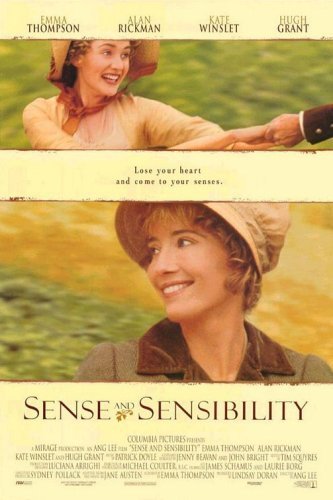
3.Sense and Sensibility by Jane Austen

Another book I've already talked about in the movie review, I'll keep this one short as well. As I said, it's often overshadowed by its author's more popular book, Pride and Prejudice, but I think Sense and Sensibility is equally as good if not superior. Whether you're a hopeless romantic or more reserved in your emotions, you'll identify with either of the two protagonist sisters.

2.The Adventures of Sherlock Holmes by Sir Arthur Conan Doyle

What is better than a mystery? Why a dozen of them, of course! While I could have gone with Doyle's original novel A Study in Scarlet, I decided on his first anthology of Sherlock Holmes short stories for this list. Scarlet has some pacing issues that I didn't care for, and the sequel The Sign of Four was just all over the place in terms of plot. So...Doyle wasn't the greatest novelist. But he was a master of the short story (much like Leo Tolstoy, but that's another post) and none of his collections quite shines like his first. 

Whether he's matching wits with Irene Adler in "A Scandal in Bohemia", battling wild animals in "The Speckled Band", or solving a Christmas mystery in "The Blue Carbuncle", Sherlock Holmes is always on the case! With his faithful friend and chronicler Dr. Watson at his side, there's no mystery he can't solve, no case he can't crack, and so suspect he can't catch (well, maybe one...). So grab a copy and a cup of tea and take a trip back to Victorian London. (And just imagine it's Benedict Cumberbatch, if you must.)

1.The Chronicles of Narnia by C. S. Lewis

I know, I'm kind of cheating because this is a whole series and not just one book, but I can't help it. I can never, ever say enough good things about this series. If you're going to read them (and I know purists will give me hell for this) I suggest reading them in chronological order (the order Lewis preferred) rather than the order in which they were published. This means reading The Magician's Nephew before The Lion, The Witch, and The Wardrobe, Suck it up, buttercup. You'll be ok. 

These books are simply magic. I go back and reread them every year or so, and I always get something new out of them. From Narnia's creation to its very last day, there is wonder, excitement, and adventure to be had. A little myth, a little magic, and a whole lot of awesome make this book series a true escape to another world. I still cry every time I read the last page of The Last Battle because it gives us such hope of the Kingdom that is to come, so clearly you can almost see it with your own eyes. Read them with your kids, read them by yourself, however you choose, just read them. Over and over and over again.

And that's my list of my 10 favorite classic novels. Were there any you felt should be on the list? Let me know in the comments. Maybe I;ll review them in future. Besides, I'm always looking for a good book to read!

Friday, March 18, 2016

Book Review: The Beast of Ravenston by Kelly Martin

When I said the sequel to Betraying Ever After was even better than the first book, I was being honest. It's a better book thematically, stylistically, and technically. But, I was also being a bit biased. See, it's based (loosely) on Beauty and the Beast. Which is my absolute favorite movie of all time. I don't care if it's a kid story. I don't care if the notion of Stockholm syndrome is the one thing everyone cites as a reason for the romance. I just flipping love it. The message that it's who you are not what you look like that matters is important to me because...well...I'm kinda homely. And I figure, if there's hope for the beast...there's hope for me. I guess I was right. I mean, I've been happily married for nearly a decade.

Besides. Who doesn't want that library, amiright?

But that's another review for another time. Today, we're all about the beast of a man living at Ravenston Castle in a book that's part Beauty and the Beast, part Phantom of the Opera, and part...The Adventure of Charles Augustus Milverton?
Master blackmailer Mr. Dodsworth makes good on his threat to send Elizabeth to serve Nicholas Wellington, the Beast...erm...Duke of Ravenston. In exchange for making Miss Beth's life a living hell, Dodsworth will reveal to Nicholas the identity of the man who set the fire that left his face permanently scarred. Nicholas is more than happy to agree since a) he wants revenge and 2) he always took a bit of pleasure in manipulating and intimidating people. It's why he was known as the Beast LONG before the fire.

But Ravenston Castle is full of secrets. The Duke is full of secrets. The servants (well, servant) is full of secrets. And Miss Beth? Well, as terrified as she is of the Duke, she's got some secrets of her own. When all of the secrets threaten to collide head on, pasts are revealed and futures are compromised. Will Beth survive a week with the Beast? Will Nicholas get revenge? And will Dodsworth be able to to deal with his plan backfiring in his face?

I. Flipping. Love. This. Book.

I want to see a movie of this.

Maybe it's my bias talking. But I didn't want to put this sucker down.

Beth is an amazing character. I kinda disliked her in BEA because I felt like she was a bit too delicate. I understand her situation. But even Emma had more of a spine than she did. Whatever happened between that book and this one, she grew a spine and then plated it with armor. True, she starts out the first couple of pages terrified of Nicholas. But that does not last long. Once she's settled in, her determination gets the better of her and she strives to make lemons into lemonade. Which is something Nicholas won't stand for.

His attempts at making her life miserable do succeed, to a point. They break her body. But not her spirit. Even in a fit of fever, while she's freakin' hallucinating and talking to people who aren't there, she's determined to do her job or die trying. And she very nearly does. Call it madness. Call it stupidity. I call it defiance in the face of the devil himself. And that takes tremendous courage.

It isn't long before the duke's more tender side comes out (and yes, there apparently is one in there somewhere) and he begins to care for the woman who is essentially his slave. Granted, it didn't start that way. It was all lust and anger and frustration. In some ways, a bit more risque than I like my romances, but expected considering the nature of the story.

Nicholas, for his part, reminded me very strongly of the Phantom of the Opera...if the Phantom had an even more tragic backstory than he already does. I've no idea what possessed him to do what he did to his first wife. Maybe it was his misguided attempt to spare her from pain. But regardless, it was a big, life altering, universe shattering mistake. He has no one to blame but himself for the aftermath. And blame himself he does. But then, that self-loathing projects on to everyone else until no one can stand to be around him. It just makes you want to reach into the book and give him a hug. And, uh...

Once again, Dodsworth is the villain you love to hate. Only this time, there was no satisfaction of cold cocking him near the end of the book. Instead, the obsequious weasel gets everything he wants and more, for the most part. True, he can't stop them from falling in love. But he can destroy their happiness by appealing to Nicholas's thirst for vengeance, something he knows Beth would most certainly hate. Things may not go exactly as he planned, but hey. As long as he gets his way in the end, who cares how he gets there?

The book ends on a bit of a cliffhanger, and I'm salivating while awaiting book 3, which is due out later this month (by the grace of God).

If you haven't started this series yet, for goodness' sake, what are you waiting for? Get yourself a copy and get to reading.

Oh, and keep a fan around for chapter 16. You're gonna need it.

For more of Kelly Martin's books, check out her website at www.kellymartinbooks.com. You'll find info on her, her books, links to all her social media (which you should subscribe to all of them, just so you can bask in her epicness in every possible forum), and all that other fun stuff.

Wednesday, March 2, 2016

Book Review: Betraying Ever After by Kelly Martin

I wasn't sure if I wanted to review the whole trilogy all at once on this one, or if it would make more sense to do each one individually. But since a) the third book isn't out yet and 2) I didn't have time to write a movie review this week (we're busy planning a trip out of town for a friend's wedding and we've all got the stomach bug, to boot) I decided to just take the books one at a time. So, without further ado...
When baron's-daughter-turned-charwoman Emma is dolled up and sent on a mission to a ball to make excuses for an ailing debutante, it's supposed to be a simple task. Get in, deliver the message, get out. She had no intention of drawing any attention to herself, least of all the attention of the city's most notorious playboy. Vaughan is a ladies' man, man's man...honestly, he's anything BUT a man. He's an immature man-child who now suddenly has his late father's title to live up to. And that includes selecting a wife of title and propriety. He doesn't know the first thing about Emma. He just knows she's caught his eye. Neither one of them knows that their mutual infatuation is all part of a carefully planned means to an end, and that a dark master is pulling all the strings for his own nefarious purposes.

If Cinderella had been a true-to-life story, I imagine it might have gone something like this. Gone are the fairy godmothers, pumpkin coaches and animal friends of the story you grew up with. What remains is a twisted tale that's almost as equally about the antagonist as it is our heroine. And, I gotta say...as far as antagonists go, Mr. Dodsworth is an incredibly complex and multi-faceted one. A singular man who forges a reputation as a master blackmailer and refuses to let go of a long-held grudge, he'll make you want to knock every one of his teeth out before the book is over. Like Loki in the Marvel universe, he's the villain you love to hate. And I can't get enough of him.

But this is Emma's story, obviously. Emma may not be as deep as Dodsworth, but she's still a likeable character with quite a bit of personality. Content to make the best of a bad situation, her optimistic outlook is a refreshing contrast to Dodsworth's own personal darkness. Of course, little does she know how directly that darkness will influence her...and how much she influences it. While her pluck got a little *too* altruistic at times, it wasn't enough to make her unbelievable. She's a grounded girl with hopes and dreams, and she'll be darned if she doesn't indulge in a selfish desire or two along the way. She is, after all, only human.

Vaughan...What can I say about him? I like him...ish. It's not that he's a bad character. He's pretty well-rounded, too. Kinda. But, as this is a "Cinderella story", he falls in love at first sight and, frankly...I've never been much a fan of the idea. It's just a personal preference. He's a shallow, callous playboy who takes to the straight and narrow, not for noble motives, but because his position basically forces him to. And while he does show some scruples before the book is over...I feel like his transformation needed a bit...more. More time. More detail. More...something. Can't quite place my finger on it. It just kind of happened so fast, and I'm not entirely convinced that a beautiful girl is enough to make a guy do a 180. But then, I suppose I've known too many jerky guys to think such a major change could happen, quite literally, overnight.

That being said, it's still a cute book. Well written. Well planned out. And a great start to a trilogy. Which is saying a lot because the second book is even better. :)
For more of Kelly Martin's books, check out her website at www.kellymartinbooks.com. You'll find info on her, her books, links to all her social media (which you should subscribe to all of them, just so you can bask in her epicness in every possible forum), and all that other fun stuff.

Stick around for more book reviews. They'll be coming less frequently than my movie reviews just because it takes longer to read a book than watch a movie (duh). But I'll try to do at least one a month (God willing and the crick don't rise).

Tuesday, February 23, 2016

The Media Mom After Dark: Serendipity

We round out our romantic movie month with a film that's less lighthearted and fluffy and more about asking existential questions regarding the nature of the universe. Namely, are we all just floating about the universe willy-nilly? Or is there really such a thing as destiny?
A chance encounter over a pair of black gloves in a busy New York department store at Christmas time brings Sara Thomas and Jonathan Trager together. But...is it really chance? Sara believes in serendipity, a word that means a "fortunate accident". Some might call it fate. But fate can be a fickle thing. After all, both Sara and Jonathan are seeing other people. After Sara offers to buy Jonathan dinner in exchange for letting her purchase the last pair of gloves on the rack (which he had planned on buying for his own girlfriend), Sara explains that she believes that the universe is constantly sending us little signs to guide us to our destiny and how we interpret and follow the signs determines whether we're happy or not.

They both start to go their separate ways, only to meet back at the restaurant when Sara forgets the gloves and Jonathan forgets his scarf. The couple then decides to spend an evening ice skating in Central Park. As the night wears on, they learn about each other. Their likes and dislikes. Their histories. One might call it a date. Against her better judgment, Sara offers Jonathan her phone number, but it's immediately blown away by a passing truck. Sara takes it as a sign to back off of having a relationship with him. When Jonathan argues that if fate wanted them to back off, they wouldn't have met up in the first place, Sara then hits on a brilliant idea. Jonathan writes his name and number on a five dollar bill and then purchases a pack of mints with it. She says if the bill comes back to her, then they're meant to be. Meanwhile, Sara promises to write her name and number in a copy of the book Love in the Time of Cholera and sell it to a used bookstore the next day. If Jonathan finds the book, then the universe will have spoken. They then go their separate ways, content to let fate take its proper course.
Fast forward several years later, and Jonathan and Sara are engaged...to two different people. Jonathan is marrying Halley in New York. At the same time, Sara, who has moved to San Francisco, is engaged to Lars, an Eastern musician. Neither one has ever truly forgotten that one magical night, however.

Jonathan enlists the help of his friend, Dean Kansky, who works for the New York Times. After getting involved with an infuriating extortionist store clerk (played comically by Eugene Levy), they manage to track down an old credit card application. Sara's last name is illegible, but they have her previous address. They follow a trail of clues around New York to her old apartment's leasing office, her former roommate, and eventually, the roommate placing service only to find it long since shuttered...and replaced with a bridal shop. With only 1 day remaining before his wedding, it seems like Jonathan has run out of time to find out if Sara really was his soul mate, or just destined to be a fond memory of a New York moment.
Meanwhile, Sara has enlisted the help of her friend Eve to go on a trip to New York to try one last chance at finding Jonathan before walking down the aisle herself. Rather than using detective-like resources, however, she just follows gut feelings that take her from the Waldorf Astoria to a driving range to various other spots around the city, where she and Jonathan have many near misses. Just as one leaves, it seems, the other arrives. That's not the only arrival, either. Lars has shown up to apologize for giving Sara less than the attention she deserves as he's been busy planning his European concert tour. The apology is short lived, though. On a romantic carriage ride, Lars becomes engaged once again in planning his tour, forgetting all about Sara in the process.

At their wedding rehearsal at the Waldorf Astoria, Halley is upset with Jonathan for not giving her enough attention, either. He's been so busy trying to find Sara, he's been neglecting his own fiancee. Just when Jonathan seems to be resolved in giving up his quest, a major clue to finding Sara comes his way. He and Dean book a red eye to San Francisco to try and find her before his wedding, even if it's just to convince Jonathan that Halley really is the girl for him. At least, he reasons, he'll finally have closure.

With Jonathan in San Francisco and Sara in New York, will our star-crossed lovers ever get together? Or are they simply pawns in fate's malicious chess game with the universe? (There really aren't any spoilers from here on out, so you get a pass....this time...)
Maybe the absence of spoilers is a spoiler...
This film spends a lot of time asking questions. Serious questions. It also makes some rather interesting observations about life, relationships, and human nature. Most of those observations come, not from our lead couple (portrayed brilliantly by John Cusack and Kate Beckinsale), but from their two close friends Dean (Jeremy Piven) and Eve (Molly Shannon).

"If you're smart enough, you learn from your mistakes. You figure it out. You... you think. You realize that life isn't some elaborate stage play with directions for the actors. Life's a mess, Sara. It's... it's chaos personified," Eve notes to her pal. And, in many ways, she's right. Relationships with other human beings are dynamic. There are so many variables and moving parts and little nuances that it can, at times, look very much like chaos personified. The very same things that may work in one relationship might not work in another. This is because we are all unique individuals, with our own histories, experiences, and feelings. The little random things that drive us to or away from people or situations are often so minute that we just chalk them up to chance.

On the other hand, Dean (who is actually a rather profound writer) states that "...life is not merely a series of meaningless accidents or coincidences. Uh-uh. But rather, its a tapestry of events that culminate in an exquisite, sublime plan." And in a lot of ways, this is true as well.

Where I draw a dividing line from the movie, though, is in the origin of this tapestry. Rather than leave such a complex and intricate thing to something as impersonal and whimsical as fate or destiny, I recognize that life is forged by the hands of an omniscient, omnipresent, almighty God. Our loving Father is a detailed author. He has a remarkable plan for every one of our lives. Now, rather than force us to follow His plan, He gives us the freedom to choose. Rather than send vague signs, He speaks clearly to our hearts.
I'm guessing that by looking back on your life, you can see the threads of His tapestry for you. Things that seemed so insignificant at the time, in hindsight take on such extreme importance. Like a line of dominoes, you can see how events were organized to bring you where you are and make you who you are today. Not all of those events may have been pleasant. But how we react to difficulties reveals us to ourselves. Every human interaction, for good or ill, shapes our lives in some way, however insignificant.

In my own life, looking back, I can say a good many things that seemed unimportant ultimately changed my life. Had I not decided to go to the private school that I attended, I wouldn't have met the secretary. Had I not met her, I wouldn't have babysat her kids. Had I not babysat her kids, we might not have gotten to be friends. Had we not become friends, I would never have dated her son. Had I never dated her son, I wouldn't have gotten married and had my 2 boys. And all of this hung on the decision of changing schools. Some might say that I simply got lucky. Others might say that it was fate. But having prayed for my husband since I was 4 years old, I know exactly what it was. An answer to prayer. God organized all of it. All I had to do was listen for His will, obey, and trust that my Father wants only the best for me (as any loving father would).
Existential questions aside, the film is another one of my favorites. It has brilliant writing and decent acting. My only caveats are the foul language (there's quite a bit) and a few sex jokes, as well as one shot of a couple making love as seen through a window (nothing you'd call explicit, though). So, definitely not one for the kiddies. But for adults looking for an otherwise sweet romance that's sure to spark some very deep conversations, it's worth the watch. If you've never seen it before, then you might just call reading this review an act of serendipity. Or maybe, just maybe, God was planning it all along.


Wednesday, February 17, 2016

The Media Mom After Dark: The Decoy Bride

Valentine's Day may have come and gone, but that doesn't mean the romance has to stop. There's always time for a movie about luuuuuuurrrrrve. Especially if you're, well...me.

What do you get when you mix Ugly Betty, Pixar's Brave, and Doctor Who? Why, the cast of The Decoy Bride, of course!
Hollywood starlet Lara Tyler is finally getting her dream paparazzi-free wedding. Or, at least, she thinks she is. But when shutterbug Marco disrupts her nuptials to James Arbor (her favorite novelist) yet again, she's determined to have a private ceremony if it kills her. Her publicist stumbles upon on idea: to have the wedding on the remote island of Hegg, which is the setting for James's first (and so far, only) novel, The Ornithologist's Wife.

James himself is a mediocre writer who relies far too heavily on sappy dialogue, verbose descriptions, and weak plot lines. He intentionally wrote the book so long that he didn't think anyone would ever read it. Much to his chagrin, many people have. And they're eating it up. But now, James is struggling to write another book. It seems he poured all the creative juices he had into that one saccharine excuse for a novel. It really is pathetic. After all the Hegg Book Club only rated the book a 4 out of 10.

Everyone on Hegg has read the book, of course. After all, there are only 75 people on the island, most of whom are 75...or older. And then, there's Katie. Katie is the island's last remaining bachelorette. She's 32, has no prospects (what with the last eligible bachelor on the island recently marrying), and is dreaming of a better life as a writer somewhere far away from the tiny island she calls home. Her last gig at the trouser catalog didn't end well. She ran out of ways to describe pockets. Katie lives at the island's only B&B with her dying mother. She's not even certain why the island has a B&B. No one ever visits. But then, a marketing conference is held in the island's ancient castle ruins,the main setting of Arber's novel.
He may have slightly exaggerated its condition in the book, though...
The marketing conference is all a facade, of course. It's actually the crew setting up for the Arber/Tyler wedding. But they're not letting anyone know that, lest the paparazzi descend and ruin yet another ceremony. Quite by chance, Katie and James meet in the island's public restroom, which is supposedly haunted by the ghost of a cow. After an awkward exchange, they part ways. While Katie's been unknowingly chatting it up with the celebrity groom however, Katie's mother Iseabail has figured the whole thing out and leaked the story to the press for money so she can travel the world before she dies.

Frustrated at having their wedding interrupted again, Lara takes off in a rage. Her publicist however, decides to stage a fake wedding for the cameras so the press can finally leave and Lara can have her dream wedding in peace. All they need is a decoy bride. And it seems Katie is the only viable choice.

Will Lara and James finally enjoy their wedded bliss? Will Katie ever find true love? Or at the very least, a way off this stupid island?
This film is rampant with quirky charm. Its awkward humor, sweet innocence (sans a few curse words and a small sex joke), and predictable yet enjoyable plot makes for a fun romp that you'll want to view more than once.

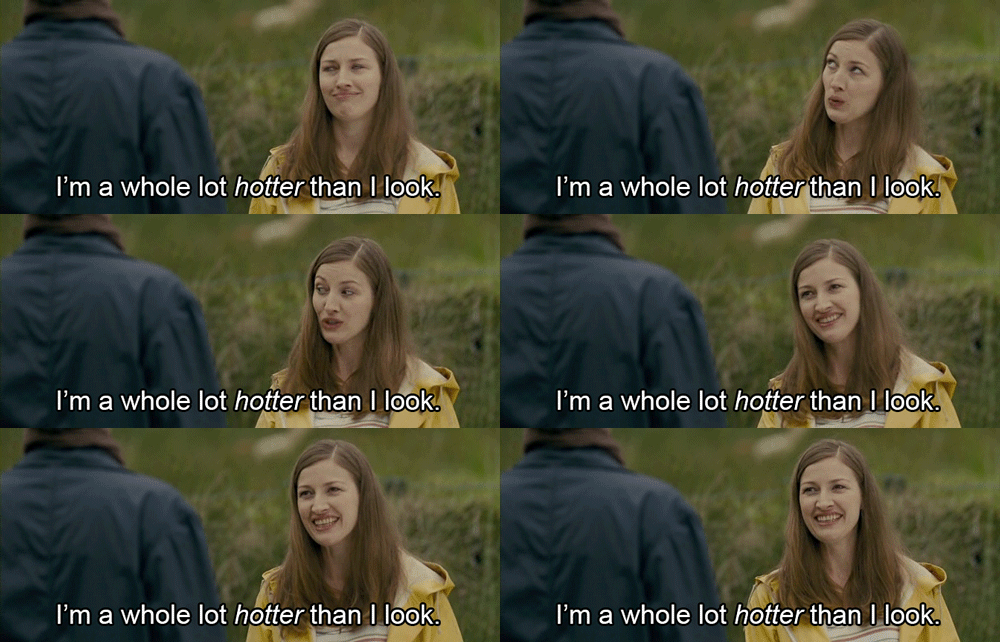
Katie (portrayed by the alarmingly talented yet severely underrated Kelly Macdonald, the voice of Merida from Pixar's Brave) is portrayed as a very rounded character. A lot of romance films have very cardboard leading ladies with very stereotypical backgrounds: They're pretty, smart, but otherwise bland with very little uniqueness about them. In a world of dull Bella Swans, Katie is a true shining gem with a genuine personality. Yeah, she hates her pathetic little life on the pathetic little island. But she doesn't moan and wail about it. She embraces her less that ideal state in life with an oddball sense of humor and instead of sulking or giving up, decides at her boss's suggestion to write a travel guide for Hegg. She knows darn well no one will probably ever read it, but she throws herself completely into it all the same, narrating the island's features with warmth and a sharp wit.
James (played by the brilliant and inimitable David Tennant, who surprisingly does not use his natural Scottish accent in a film set in Scotland) is his own worst critic, and with good reason. The Ornithologist's Wife truly is awful, and he knows it. Whenever Lara starts quoting part of the book to him, he sneers in disgust at the melodramatic drivel. But at the same time, he struggles to find his identity as an author. It comes as no surprise then to learn that quirky Katie helps him find his muse and write a second book. And this one is actually good. But, as I've stated, Katie is such a well-rounded character, he really couldn't help but write a well-rounded novel. The movie is as much a story of self-discovery for him as it is a romance between the two leads.
Plus...it's David Freakin' Tennant. *le sigh*
The rest of the cast are mostly British television stars in some form or other, with perhaps the only exception being Michael Urie from the American show Ugly Betty. All told, though, the whole cast does a fantastic job of bringing to like the odd little characters who live on the island, and Lara Tyler's poor overworked management team.

The ending is a sweet and touching one. We learn that Iseabail eventually did die from her illness, but was given the opportunity to travel by a much-matured Lara Tyler who learned some humility and humanity from the ailing woman and eventually became not just a better person, but a better actress because of it. It's a nice twist that brings depth to what I have already said is a predictable ending. But predictable or not, it's still flippin' adorable.

This quaint little film, with a breathtaking setting, is the art deco bracelet at the pawn shop. The shapes are a bit too clunky. The colors are a bit too loud. Just sitting in the display case, you'd swear it's something you'd never be caught dead in. But then, for some unknown reason, you feel the urge to try it on. And once the clasp is set, everything just fits. It suddenly has a whole new personality and you find yourself never wanting to take it off. That's how this film works. You see it in your Netflix queue. You read the description. It sounds either too far fetched or too cliche to be any good. But you press play anyway, and when the credits roll, you add it to your favorites list. It's just cute, perky, and fun. And who doesn't love a movie like that?


Thursday, February 11, 2016

The Media Mom After Dark: Pride and Prejudice

We continue our February romantic movie month with another Austen classic, Pride and Prejudice. I could have done a Take Two comparing the Colin Firth miniseries with the Keira Knightly movie, but opted not to (at least for now) since one is substantially longer than the other and it would almost be like comparing apples to oranges. So, we'll just stick with the 2005 movie version for the time being.


I normally save the spoilers for later in the review, but this story is so complex and involved, there's really no way to do this without having spoilers all the way through. So...
The story revolves around the Bennet girls, five daughters of a cash-poor land owner in Georgian England. Jane, the eldest, is the shy beauty, a delicate flower of a woman who is so sweet and kind, she can never think ill of anyone. Next is main protagonist Lizzie. Her father's favorite child, Lizzie is a strong, stubborn, but well-meaning spitfire with a sharp wit. The classic middle child is Mary, the plainest of the daughters, who is studious, pious, and a bit self-righteous at times. Kitty might be the older of the remaining two, but she often follows youngest daughter Lydia's lead when it comes to mischief. Both girls are silly, flirtatious, and immature with no sense of propriety or decorum.

Mrs. Bennet, the matriarch of the family, is nearly as silly and improper as her youngest daughters, and only thinks of marrying them all off to wealthy, handsome men. Mr. Bennet, well...he just wants peace. He spends a good deal of time holed up in his study trying to avoid the antics of his overbearing wife, but also failing to properly discipline his daughters.

The entire family is turned upside down when Mr. Charles Bingley moves in to a neighboring estate. Bingley is wealthier than anyone else in the county...and he's single. Instantly, Mrs. Bennet determines that Bingley is going to marry one of her daughters, he just doesn't know it yet. At the next public ball, Mrs. Bennet practically throws Jane (the family beauty) at him. Fortunately for everyone, Bingley takes a shine to Jane almost immediately. They have very similar temperaments and Bingley is nearly as shy and reserved as Jane is. But he's also easily influenced by the opinions of his closest friend Mr. Darcy. And Darcy is not easily impressed. He does, after all, own half of Derbyshire, making him far richer than even Bingley. And Darcy isn't the only person non-plussed at this party. Charles's sister Caroline wants nothing to do with these simply country folk, who may have some property and title, but are a far cry below the nobility she's used to rubbing elbows with.
This Caroline...judging you.
Jane may be a beauty, but her family is hardly suitable to be united with a man of status such as Bingley. All except...Lizzie. For some reason, Darcy can't shake the woman from his mind. And that will never do. In an effort to try and dismiss the notion of any redeeming qualities about the Bennet family, Darcy insults Lizzie to Bingley's face. Unbeknownst to him, though, Lizzie has overheard every word and has a few verbal barbs of her own to hurl at this proud, pompous man. It's hardly the beginnings of an amicable relationship.

In time, life gets even more complicated. Lizzie soon finds herself in the early stages of a relationship with Mr. Wickham, a soldier currently stationed in town with the rest of the militia. It seems ideal. Wickham despises Darcy as much as Lizzie does. Darcy and Wickham grew up together and Wickham regales Lizzie with a tale of misfortune at the hands of Darcy that left him forced to join the military to support himself.

At the same time, the Bennets are being visited by Mr. Collins, a preacher, and Mr. Bennet's closest male relative, making him the future heir of the estate. Collins is an awkward man, who weasels his way into the good graces of others to try and elevate his status. He's come to select one of the Bennet girls as a wife in an effort to keep the girls on the family estate when he inherits it. After being steered away from Jane, who has already formed a close attachment with Bingley, he selects Lizzie as the object of his, erm...affections. After a bungled proposal, Lizzie refuses his advances, and Collins opts instead to marry Lizzie's best friend Charlotte, who is already on the verge of becoming an old maid.

Before long, Jane receives news that Bingley has vacated his residence and returned to London, possibly for good, with little to no explanation as to why. Lizzie surmises that Bingley is being manipulated by Caroline and Darcy and sends Jane to visit her aunt in London to try and win Bingley back.

Soon afterward, Lizzie goes to visit the newly married Charlotte Collins. The rectory that she and Mr. Collins lives on is part of the property of Lady Catherine, a haughty, proud socialite...and Mr. Darcy's aunt. Darcy and Lizzie spend most of their time verbally sparring with one another, until one rainy day, Darcy declares his love for Lizzie and proposes. Lizzie is horrified and summarily rejects him by throwing his past transgressions at him: separating Bingley and Jane and ruining the life of poor Wickham.
Yeah, your timing could not be worse, dude...
Later Darcy comes to leave her a note explaining his actions: he truly believed Jane to be indifferent to Bingley because she is so shy she never showed any strong attachment to him. He recognizes now, thanks to the passion of Lizzie's words, that that was a mistake, but still stands by his actions as he was only protecting his friend. And as for Mr. Wickham...well, let's just say the story he told Lizzie is far from true. Wickham turns out to be a fraud and a scoundrel.

As Lizzie starts to reconsider her prejudice against Mr. Darcy, Jane returns from London having not seen Bingley at all, but putting on a brave face and declaring herself "over him" so as not to worry her sister. Lydia is invited by some friends to go to the seaside and Lizzie is invited by her aunt and uncle to visit Derbyshire. While there, Lizzie again meets up with Darcy, this time on much friendlier terms. But their visit is cut short by news that Lydia has disappeared... with Wickham!

Will the Bennets find Lydia before she ruins the family reputation for good? Will Jane ever be reunited with Bingley? Will Darcy and Lizzie ever overcome their pride and prejudices against one another? (Well, I can't spoil everything! You're lucky I told you this much!)
I love this movie. It's one of my favorites. And surprisingly enough, it's one of my husband's favorites. He likes the witty repartee between Lizzie and Darcy. He likes the soundtrack. It's not often you get a guy to like a chick flick. My husband's the kind of guy who isn't happy unless something's exploding. So for him to like this film as much as he does is a pretty big deal.

The film itself doesn't deviate too much from its original source material. A few secondary plot lines and characters are dropped, but it does nothing to alter the overall story.

The chemistry between Knightly's Lizzie and Matthew McFadyen's Darcy is strong. You spend the entire film just waiting for them to get over themselves and get together already, and the many near-misses keep that good tension going.

All of the acting is superb, but I feel the need to call out two in particular. I can't picture a better Mr. Bennet than Donald Sutherland. I'm not normally a big fan of his acting, but he straight up owns this character. And as far as Lady Catherine...Is there anyone better at playing uptight, cranky British aristocrats than Dame Judy Dench? I would say no. Emphatically.
This is Lady Catherine...also judging you.
The soundtrack to this film is gorgeous. I don't often focus on a film's score, unless we're talking about an actual musical, so for me to praise it is a special thing. Seriously, if you need some music to listen to while you study or read a book, or heck, even clean the house, I'd recommend adding this one to your playlist.

All told, what we have here is a perfect little period piece that, like Sense and Sensibility, is as chaste as can be, so no worry about watching it with your teens. There's a kissing scene right at the end, and the only other physical contact in the whole film is one particularly sexy hand-holding.
 How's that for 18th century puritanical values? Hand-holding is hot.
If you haven't watched it before now, good grief, what are you waiting for? Valentine's Day is right around the corner. Get yourself a copy, snuggle up with your man, and enjoy what many have called the most romantic novel ever written. And if you have seen it...you know you're gonna watch it again. No one watches this movie just once. When I got the DVD, I watched it 5 times that week. That may sound foolish to some, but, as Charlotte observed, "We are all fools in love."

Saturday, February 6, 2016

The Media Mom After Dark: Sense and Sensibility

Apologies for the delay in posting. My family and I were fighting the Cold That Wouldn't Die. Difficult to write when you can barely see the keyboard due to coughing so much.

This being February I thought I might review some of my favorite romantic classics. And I had planned to post the first one last week in tribute to the late, great Alan Rickman. Not a man one would normally associate with romance (what with frequently playing villains and all), Rickman still managed to pull off at least one performance as a romantic lead. And it is, perhaps, one of the most underrated and under-appreciated performances of his career. I speak of course of the Jane Austen classic, Sense and Sensibility.
The story begins as any good romance should- with death. John Dashwood's father is dying. And before he does, he bequeaths his entire (rather extensive) estate to his only son. Legal entanglements prevent the fortune from being split up, and so John is charged to care financially for his step mother and three half-sisters: Elinor, Marianne, and Margaret. At first, John means to give them a sizable living. But his own greed, and the cold, callous, haughty nature of his wife Fanny eventually whittles the generous intention down to bestowing the ladies with little more than pittance to live on. They swoop in to take possession of the family manor, and Mrs. Dashwood and her daughters are reduced to being guests in their own home.

While the Dashwood ladies are trying to find new accommodations, Fanny's brother Edward Ferrars comes for a visit. His shy, humble nature eventually wins the heart of equally modest and reserved Elinor. But Fanny and her controlling mother have higher ambitions for Edward (whether he likes it or not) and make very plain their displeasure at the potential match. Before long, the ladies have found a modest house to rent, thanks to the charity of Mrs. Dashwood's caring but socially inept cousin Sir John Middleton.

It is Sir John's closest friend Colonel Brandon who is quickly smitten by beautiful, passionate Marianne. But after a chance meeting, Marianne's head is turned instead by the dashing John Willoughby. He is a man with a roguish grin and a sharp wit...and a sizable fortune of his own. With the two elder Dashwood girls pining away after their respective loves, it seems only natural that one or both should marry before long.

But this is a Jane Austen novel. And love is never straightforward in Austen's world. Secrets are revealed about both men that could ruin both relationships permanently. Will Elinor and Edward manage to overcome Fanny's shallow disapproval (and Edward's duty to an old promise) and find true love? Will Marianne and Willoughby run off in a whirlwind of passion? And what of poor Colonel Brandon? Can a thrity-five year old man charmed by Marianne's beauty but as modest and reserved as Elinor find love with either one, or even at all?
This film is a masterpiece of story telling. To be honest, the book was, too. It's often forgotten in the wake of Austen's more popular novel Pride and Prejudice (another review I plan on doing this month) but it's equally worthy of praise and admiration, especially considering the strong messages it conveys.

Elinor is a woman of practicality, duty, and honor. Love, in her mind, can only thrive in the proper environment: social and familial acceptance, compatible temperaments, and mutual affection and dedication. While she dearly loves Edward, she knows it wouldn't do to let her head run away with her heart. One must be stable, calm, and reasonable about such things. And when an old promise takes precedent over her claim on Edward, she realizes the honorable thing to do is to step back, even though it will destroy her own happiness.

Marianne, meanwhile, is red blooded, hot headed, and free spirited. Perhaps a bit too much so. She's all passion and romance, especially when it comes to Willoughby, but at the cost of her self-control and good judgment. And when dark secrets come up from Willoughby's past, her immature response quite literally almost gets her killed.

The title Sense and Sensibility doesn't carry quite the same meaning now that it did in Austen's day. We often equate the two as being related. But a more archaic use of the word sensibility relates to one's ability to feel. Your "sense ability" as it were. In light of that, it's easy to see that Elinor is all sense (that is, reason) while Marianne is all sensibility (that is, emotion).
So many feels, so little time...
Austen herself encountered quite a bit of controversy when she published the book. Some argued that, since Elinor eventually did marry Edward, it would seem that sense triumphed over all. But many modern scholars have speculated that it was never Austen's intention that one be considered better than the other. Rather, it was an indication that balance between the two in any relationship is paramount. Marianne's sensibility overpowered her good sense and her consequences were obvious. But Elinor's overbearing sense of duty caused her to bottle up her feelings in unhealthy ways and she spent a great deal of time carrying unnecessary emotional burdens.

Besides the messages, though, the acting and writing is phenomenal. Emma Thompson (who not only portrayed Elinor in the film, but also wrote the screenplay) simply soars in this film. I've always been a fan of her acting ability, and this film is definitely one of her best. Kate Winslet (who played Marianne and is an actress I've never particularly cared for) actually does a very good job playing her part, as well.

The rest of the cast is fairly decent. Not spectacular, but not awful. With two exceptions. One is Hugh Laurie's Mr. Palmer. I've always liked Laurie as a comedic actor. I was a big fan of his when he worked with Stephen Fry on their skit show, A Bit of Fry and Laurie. Mr. Palmer may not have much of a role in this film, but for the short time he's on screen, Laurie milks the character for all he's worth. It's a welcome relief throughout the film.


The other is Alan Rickman's Colonel Brandon. Rickman, who hadn't really played a romantic lead up until this point (and to my knowledge, never did again) straight up owns this character. He's quiet, sober, and obviously lonely. He's a man who's had his heart broken once before, and who guards it ever more vigilantly now. I almost felt as if he deserved better than Marianne, and had it not been for Edward, I'd have thought he and Elinor would have made a smart match. But opposites do attract, and in many ways, he and Marianne complement one another. His sober-mindedness is just what she needs to keep her grounded in reality. Her carefree spirit is enough to breach the walls he's built around his heart and let him love again. It is, without doubt, one of his best performances. I only wish he'd been given the chance to play a romantic lead more often. He was truly a remarkable and versatile actor and will be sorely missed.
In all, it's a great classic, and as a bonus the film is completely chaste so there's nothing your teens would be embarrassed to see. So, if you're thinking of having a movie night with your teenage daughters, this is definitely tops on my recommended list. They'll be absorbing the culture associated with the classic novel and you'll have fodder for plenty of after-movie conversations about how exactly they should approach their romantic relationships when pursuing marriage. Win-win!